ALUMINUM CANS
Please wash and separate pop from beer and place them onto flats (flats are supplied by the depot)
Fun Fact:
Aluminum cans are crushed into biscuits and compacted into a large block. Then they are transported in bales weighing over 20 tonnes containing over 1.2 million containers. These bales are sold as a commodity and then melted down and reformed into new aluminum cans. Turnaround for this process is only 60 days from when you return it until it’s back on the store shelf.
PLASTIC BOTTLES
Please wash, remove caps and separate alcohol from non-alcohol and 1 litre and under from greater than 1 litre
Fun Fact:
Clear plastic beverage containers are compacted, shredded and sold as a commodity. Some plastic is then put through a process turning into a fibre that is used to make fleece jackets like the one pictured here. Most plastic collected is used to make new bottles for things like motor oil.
GLASS BOTTLES
Please wash, remove lids and separate alcohol from non-alcohol and 1 litre & under from the greater than 1-litre items
Fun Fact:
Glass Containers are collected, crushed into pieces and ground back into the sand, which is what glass is made of. The sand is then sold for use as a mix in sandblasting material or made into fibreglass used to insulate homes.
BI-METAL CANS
Please wash and separate 1 litre & less from the greater than 1-litre items
Fun Fact:
Bi-Metal containers are compacted, melted down into scrap metal, and then used to make construction rebar and fencing.
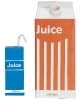
DRINK BOXES
Please wash and separate 500 ml and under from 501 ml to 1 litre
Fun Fact:
Drink boxes and gable top containers go through a hydra-pulping process to separate the material they’re made of. This material is used to make cardboard boxes and industrial paper products.
GABLE TOP CONTAINERS
Please separate 500 ml and under, 501 ml to 1 litre and over 1 litre
Fun Fact:
Drink boxes and gable top containers go through a hydra-pulping process to separate the material they’re made of. This material, along with the pulp from the box of a bag in a box is used to make cardboard boxes and industrial paper products.
BAG IN A BOX
Please separate alcohol from non-alcohol
Fun Fact:
Drink boxes and gable top containers go through a hydra-pulping process to separate the material they’re made of. This material, along with the pulp from the bag in a box is used to make cardboard boxes and industrial paper products.